SILVER RIVER
Transformer Co.
Built for the American grid.
The Americas take care of the Americas
US representation of seven vetted transformer plants across Latin America — 10 kVA to 100 MVA network capability; 15 kVA to 5,000 kVA quoted to US buyers here — designs reviewed plant by plant against your IEEE / ANSI configuration, DOE efficiency and UL where applicable
Why Silver River
You remember how the last order went.
Silver River is the reply — point by point.
The delivery date landed two budget cycles out.
Here it's weeks, not years.
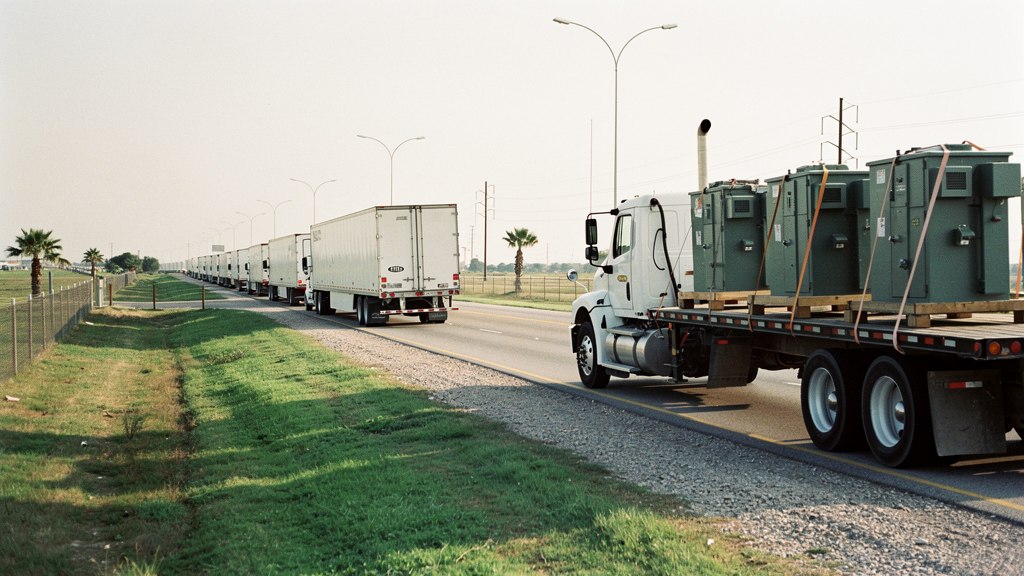
Delivery in weeks, in writing, on the quotation you sign — eight to ten weeks ex-works on current network-factory quotations, from plants that hold core and tank inventory and quote a production slot to your order. And from Monterrey, Texas is days on the road, not weeks on the water.
The clock → 02The price moved twice before the PO was signed.
Ours comes in writing — up to 40% less on three-phase.
One written quotation: factory, tariffs, freight — the duty line confirmed by a licensed customs broker, nothing buried in the unit price. Proven equipment, up to 40% less on the big three-phase classes, tariffs included.
The gap, in dollars → 03The approved list hasn't grown in years — qualifying a new maker takes engineers nobody can spare.
So we did the qualifying for you.
Seven plants, four countries, one contact. The legwork is done before you ask — your engineers review a file, not run a project.
How we vet → 04Your order waited behind somebody's framework agreement.
A slot with your name on it.
The plants hold inventory and quote a production slot to your order — no multi-year framework ahead of you in the queue.
In production now → 05The bargain import came with no test file and nobody to call.
Every unit ships tested — and a US company answers the phone.
A routine test report on every unit, designs already in service on US feeders from US Electric’s export lots, and the manufacturer’s warranty on the quotation you sign — three years from shipment on current export quotations. Same business hours end to end — your factory is awake when you are, before the purchase order and after the truck leaves.
Tested and proven →Factory-direct transformers from a vetted Latin American network: up to 40% less on three-phase, delivered in weeks, landed in writing with the duty on the quote, tested before they ship — and a US company on the phone in your hours, before and after delivery.
01 · The clock
Weeks, not years — in writing
Demand for transformers hasn’t looked like this in fifty years — AI data centers, new factories, electrification on every feeder. It is the best problem an economy can have, and it has outrun the plants that make the iron: lead times on large power units run two to three years1, with distribution averaging ~30 weeks2 and demand up 116% on power units and 41% on distribution since 20193. The projects can’t wait for capacity to catch up — which is why serious buyers are adding qualified nearshore capacity now.
1 Wood Mackenzie, 2025: power and GSU lead times 128–144 weeks 2 Wood Mackenzie, Q2 2025 3 Wood Mackenzie, Aug 2025 · Also: DOE Transformer Supply Chain Report · DOE Distribution Transformer Convening, Mar 2026 · NEMA · NREL · APPA
US average · distribution
~30 weeks
Lead time, distribution transformers — Wood Mackenzie, Q2 2025
Power & GSU
128–144 weeks
Large units locked above two years — Wood Mackenzie
Ordered today
Up to 3 years
Vs 4–6 weeks five years ago — NEMA
This network · ex-works
8–10 weeks
On current network-factory quotations — September 2026
You know the clock — you live it on every order. What changed: demand for the big three-phase classes is forecast short into the 2030s, and prices are projected another 20–30% up before it clears (Wood Mackenzie). Lead times are easing at some plants and still run to years at others (DOE, March 2026) — the comparison that matters is the date on your last quotation next to the date on ours. Stock is a unit; capacity is a schedule. This network quotes production slots, with the delivery date in writing on the quotation.
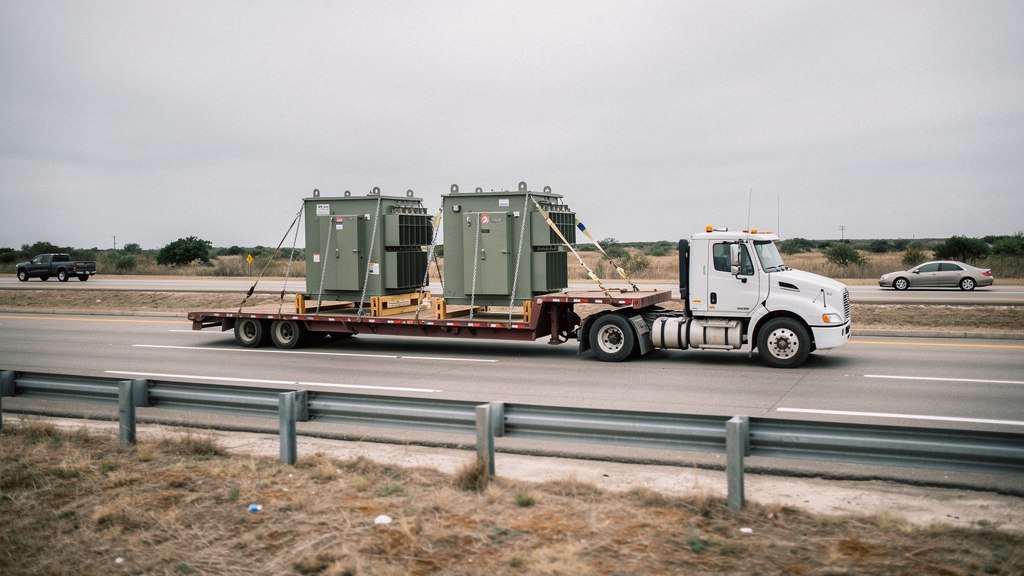
From Monterrey, Texas is a truck ride
US Electric sits in the Monterrey industrial corridor, about 150 miles from the Laredo crossing. Units leave the plant bolted to their skids on a flatbed and enter the US overland through Laredo — days on the road, on a corridor the plant already runs — not weeks on the water with a port and a drayage leg on the far side. Silver River coordinates the freight and the entry — the truck on the plant’s corridor, the clearance with your customs broker, in your name — so the paper and the truck arrive together. Plants further south ship by ocean into the Gulf on lanes the network already uses.
02 · The gap, in dollars · Sept 2026
The gap, in dollars.
Every number on this table is an estimate — an orientation, not an offer. The real number is the factory’s written quotation for your specification. The shape of the gap:
| Inside the landed price → | ||||||
|---|---|---|---|---|---|---|
| Class | US market1 | Landed2 | Your savings3 | Factory4 | + Tariffs5 | + Logistics6 |
| 150 kVA · 3φ pad-mounted | $27,900 | $22,100 | 21% | $16,100 | $4,000 | $2,000 |
| 750 kVA · 3φ pad-mounted | $58,000 | $36,600 | 37% | $26,500 | $6,600 | $3,500 |
| 1,000 kVA · 3φ pad-mounted | $64,400 | $42,400 | 34% | $31,100 | $7,800 | $3,500 |
| 1,500 kVA · 3φ substation | $77,100 | $49,100 | 36% | $36,100 | $9,000 | $4,000 |
| 2,500 kVA · 3φ substation | $106,500 | $69,500 | 35% | $52,400 | $13,100 | $4,000 |
Proven equipment — already sold and running in the US — up to 40% less on the big three-phase classes7, tariffs included. The gap widens with size, exactly where US lead times run longest.
1 Average of published US stockist webstore prices for new units (September 2026) and a published pad-mounted cost-guide midpoint (Apr 2026), aluminum windings; where only one source publishes a class, that source. Sources named on request. Large-utility contract pricing runs below list.
2 Factory ex-works plus tariffs plus logistics — the stack is opened to the right of the savings column.
3 Estimated gap vs the published-price average — an orientation, not a quote. Every figure moves with exchange rates, tariff regime and specification: switchgear, voltage class and loop feed all price differently. Nothing on this table is an offer. Send a spec; compare written numbers.
4 Indicative network average, ex-works at the network’s Mexico plants, converted from MXN at the September 2026 rate — anchored to written factory quotations where they exist, estimated from network reference pricing elsewhere.
5 Section 232 tariff at the current 25% rate on customs value (September 2026). USMCA origin removes the base duty, not the Section 232 line. The tariff line on every quotation is confirmed per tariff code by a licensed customs broker.
6 Overland Monterrey–Texas estimate, passed through at cost and confirmed per delivery point.
7 “Up to 40%” is a ceiling, not an average: against the published-price average the estimated gap on the big three-phase classes on this table runs 34–37%, and it runs higher against the higher-priced published sources within a class. The number that counts is the one on your written quotation.
The duty is on the quote.
Every quotation lands the unit for you on paper: the factory’s price, the tariff line, the freight. It is priced to your site — DAP, Incoterms 2020, on current quotations — with the duty shown as its own line and confirmed per tariff code by a licensed customs broker before it goes on the quotation — not assumed away, not blended into the unit price to be settled at the border later. Tariffs move; the quotation you sign carries the number that applies on the day, and the difference between the factory’s price and what you pay is visible from the first page.
What you see is what crosses.
03 · How we vet
A second source, vetted by a US-licensed engineer
Few buyers have engineers free to qualify a new manufacturer. That legwork is the job here.
Both sides of the border, one desk. The commercial front and the engineering review sit in the United States; the plant relationships, the language and the factory floors are home ground in Latin America. Think of it as an extension of your sourcing and vetting desk — the qualification work is done before your RFQ, not after it.
Before a plant quotes through Silver River it has been screened on paper, walked on the floor, read by a US-licensed engineer against US utility configurations, checked against units already in service, and signed on commercial terms. The network arrives vetted and documented — seven plants across four countries, from Monterrey to Buenos Aires — so your engineers review a file instead of running a qualification project, and your sourcing desk gets a second origin on record without an eighteen-month clock.
The spread is deliberate. Four countries means four separate economies — four steel supplies, four currencies, four sets of headlines — and a specification that never depends on any one of them: before the purchase order is signed, what stalls in one country routes to a vetted plant in another; after signature, the factory contract governs that order. The map keeps widening, country by country, for exactly that reason.
The spread is also coverage. A 10 kVA pole can and a 100 MVA power unit, liquid-filled and dry, standard distribution and rectifier-duty specials — the catalog runs wide enough that your specification lands on a plant built for it, not on a plant stretching to take it. One contact in front of all of them.
04 · In production now
The workhorse sizes, in production now
From pole stock to data-center pads — the workhorse classes are the center of this network’s production. The plants hold core and tank inventory, and a production slot is quoted to your order: the date goes on the quotation, not on a promise. No multi-year framework sits ahead of you in this queue.
| Class | Range | Workhorse sizes | Where it goes |
|---|---|---|---|
| Pole type · 1φ | 15 – 150 kVA | 25 · 50 · 100 kVA | Line stock for co-ops, munis and rural systems; storm replacement |
| Pad-mounted · 1φ | 30 – 225 kVA | 50 · 100 · 167 kVA | Subdivisions and light commercial, loop and radial feed |
| Pad-mounted · 3φ | 150 – 1,000 kVA | 300 · 500 · 750 kVA | Commercial & industrial sites, EV charging, solar collection |
| Pad-mounted · 3φ large | 1,500 – 3,000 kVA | 2,000 · 2,500 kVA | Data centers and storage blocks — the class forecast to stay short into the 2030s (Wood Mackenzie) |
| Station & substation | to 5,000 kVA | 3,000 · 5,000 kVA | Utility stations, plant and campus substations |
Ranges quoted to US buyers · liquid-filled and dry-type · built to US utility configurations per specification · ceiling 5,000 kVA per US Electric, September 2026
05 · Tested and proven
Tested before it ships. Proven in the US.
Every unit leaves the plant with its routine test report, run at the plant’s laboratory to its test standard — NMX-J-169-ANCE at US Electric and Transformadores Orión — turns ratio, winding resistance, insulation resistance, losses and impedance, applied and induced voltage — and the report travels with the transformer. Type-test reports for the design family come with it when your specification calls for them. You do not have to ask, and your own test firm gets the factory data it needs for acceptance on site.
The designs are not new to the American market: US Electric’s prior export lots — pad-mounted and pole units built to US utility configurations — are in service across the border (plant record). The warranty is the manufacturer’s, stated on the quotation you sign; current export quotations carry three years from shipment.
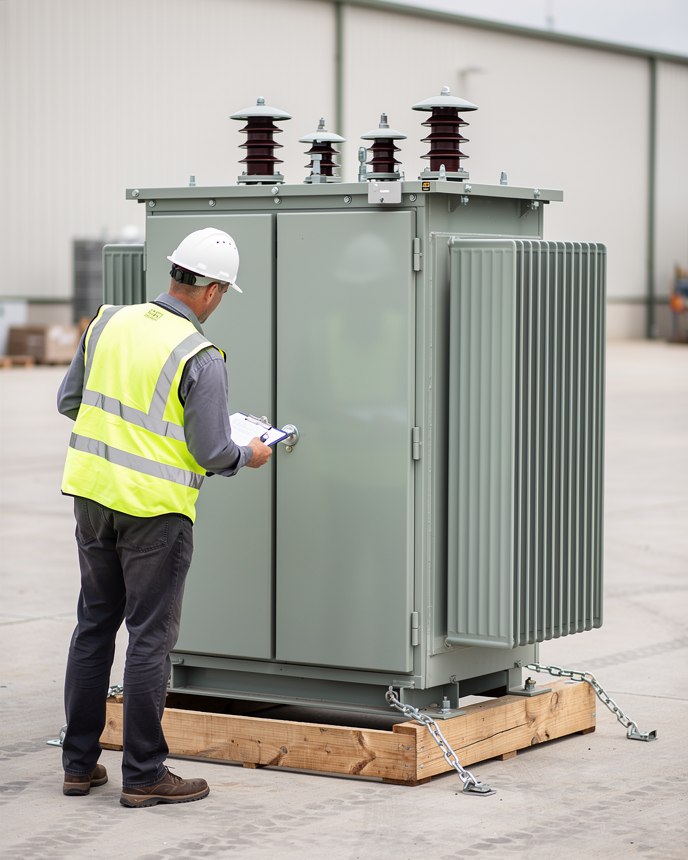
Your factory is awake when you are.
Same business hours end to end — a question on a drawing goes out in the morning and comes back the same afternoon, from a plant on your clock. One US company holds the factory relationship on your behalf, before the purchase order and after the truck leaves.
Two continents. One grid. One bridge.
Nobody else is building it. Send a spec and compare the numbers.